


Koh-I-Noor Diamond’s Ongoing Controversy Explained
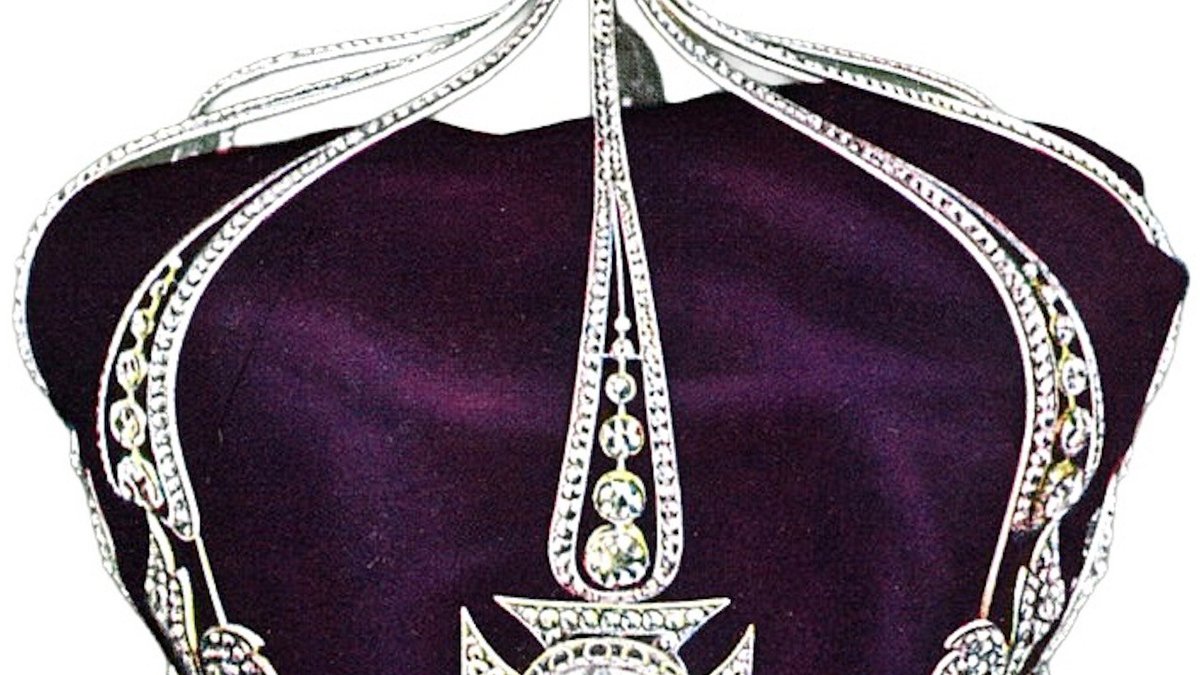
Why is the Koh-i-Noor diamond so controversial? Mystery, power, conquest, and a very famous crown: the Koh-i-Noor has one of the most complicated histories of any diamond on Earth.
A Star from India
The Koh-i-Noor is one of the largest cut diamonds in the world, weighing 105.6 carats. Its exact origins are unknown, but it is believed to have originated in the Kollur Mine in the Golcanda region of India before passing through the hands of dynasties and empires. Originally much larger, it was recut in the mid-19th century into its current oval brilliant form, enhancing its sparkle.
Though never formally graded by a modern laboratory, gem experts estimate that it would likely be in the top colorless range (D–E) with exceptional clarity, comparable to an Internally Flawless stone. Today, it is set in the Crown of Queen Elizabeth The Queen Mother and displayed as part of the British Crown Jewels in the Tower of London.
The Mountain of Light
Nobody knows exactly where in India the Koh-i-Noor stone was originally discovered, but at 186 carats (about the size of an egg), it must have been like uncovering a star that had fallen from the sky. Its first recorded history dates back to the 14th century, when it was owned by different ruling Maharajahs and Mughals as they gained and lost power. Apparently, every ruler declared the stone as his own, but because nobody held power for too long, the diamond changed hands, and often.
It wasn’t until 1628 that there were documented images of the stone; by then it was in the hands of the big-spending Shah Jahan (the Mughal ruler who built the Taj Mahal). He commissioned a magnificent, jeweled throne and had the Koh-i-Noor diamond placed at the top of the head of an elaborate gemstone peacock.
From Peacock to Crown
In 1739, Persian commander Nadir Shah took over the region. As the legend goes, when he first laid eyes on the diamond, he declared it ‘Koh-i-Noor’ (or, the mountain of light), and the name stuck. Shah took the Peacock Throne—along with everything else in the country’s abundant coffers—then removed the Koh-i-Noor and placed it on his armband.
Once removed from India by Shah, the diamond was held for 70 years in what we know today as Afghanistan. In 1813, it was returned to India by the wealthy Sikh ruler Ranjit Singh, who recognized the diamond as an emblem of power. But like the Koh-i-Noor’s previous owners, his reign didn’t last long. There was always someone more powerful who aspired to wear the stone and prove they were the mightiest and richest in the region.
After changing hands between Punjab rulers, the next in line was the British Empire. In 1849, the British took control over the country’s trading posts, natural resources and riches, and forced the last Sikh Maharaja Duleep Singh to forfeit his rights and riches, including the Koh-i-Noor. That year, the stone was given to Queen Victoria.
Related: Grace Kellys iconic diamond ring
Controversy Over Ownership
Today, there is some controversy surrounding whether the Koh-i-Noor diamond rightfully belongs to the British Royal family, as there is a growing debate between nations over ownership and the legacy of colonial-era acquisitions.
Once in the hands of the Brits, they knew they had a spectacular treasure, displaying it and all its grandeur at the 1851 Great Exposition in London. Apparently, the rock, one of the largest diamonds at the time, didn’t impress the public, who had expected to see a magnificently sparkling jewel. The Times of London reported in June 1851: “Many people find a difficulty in bringing themselves to believe, from its external appearance, that it is anything but a piece of common glass.”
That comment didn’t go unnoticed by Prince Albert, who had the stone recut to enhance its inherent beauty and sparkle, and to ensure it made a greater impression. In doing so, he reduced the Koh-i-Noor diamond in size by nearly half to 105.6 carats, but made it far more beautiful (so beautiful, in fact, that Queen Victoria had been known to wear it as a large brooch).
Displaying the Jewel
The Koh-i-Noor diamond has remained in Queen Victoria’s family; in 1911, it was set in the Imperial Crown and worn by Queen Alexandra, the wife of Edward VII, and then by Queen Mary, wife of George V (Victoria’s grandson). Next, in 1937, it was set as the centerpiece of the Queen Mother’s crown, the wife of George VI and mother of modern-day royalty, Queen Elizabeth II.
It’s been like a sleeping beauty resting in the Queen Mum’s crown for the past 80 years and has rarely worn. Its last outing was at her funeral in 2002, when the crown sat atop the coffin. Since then, it has not been used in any ceremonial crown and remains on display as part of the Crown Jewels.
Given the long history of forced transfers and shifting ownership, the current placement of the stone is a tangible reminder of imperial power relations that persist in modern diplomatic relations. The fact that the diamond remains in a British institution, despite repatriation movements from affected nations, highlights the complex intersection of cultural heritage and state sovereignty.
A Future Unresolved
Ahead of the coronation of King Charles III in 2023, there was widespread speculation that Queen Camilla might wear the crown set with the Koh-i-Noor. However, to avoid controversy around whether the British Royal family have rightful ownership of the diamond, the Koh-i-Noor was ultimately omitted and replaced with Cullinan III, IV and V. In tribute to Queen Elizabeth II, the crown was reset with these Cullinan diamonds, part of the late queen’s personal jewelry collection and often worn by her as brooches.
More than 175 years after the Koh-i-Noor entered British hands, its future remains unresolved. Will it ever return to India, or remain among the Crown Jewels? If Mamdani’s very public callout is any indication, this centuries-old saga is nowhere near over.

Top Jewelry Moments at Venice Film Festival 2026

